



Automating Startup Treasury: A Playbook for Founders & CFOs
Pac O'Shea
3 March 2025

Treasury automation can save startups time, reduce errors and streamline financial operations for growth.
Automating startup treasury means replacing manual bank-balance checks, spreadsheet reconciliation and ad hoc payment approvals with software that tracks cash in real time, reconciles automatically, and, increasingly, executes routine cash movements itself within rules you set. The immediate payoff is fewer manual hours and fewer errors; the strategic payoff is that your finance function can absorb transaction growth without headcount growing at the same rate.
TL;DR
- Real-time cash tracking replaces the manual balance-check-and-spreadsheet routine that breaks down as account and currency count grows.
- Automation targets the routine, not the judgment calls: reconciliation, forecasting inputs and payment execution are good automation candidates; risk policy and unusual transactions still need a human owner.
- Fraud and error risk drop when automated monitoring and dual controls replace manual, ad hoc checks.
- Growth support: automated systems handle more transaction volume without a proportional headcount increase.
- 2026 shift: the newest treasury platforms don't just forecast or flag, they can execute the recommended action directly, subject to your approval rules.
Startups can save time and reduce errors with [treasury automation](https://www.roundtreasury.com/features/automate-your-treasury). Automating tasks like cash flow tracking, forecasting, and payment processing not only saves time but also lowers financial risks. Here's how it helps:
- Real-time cash tracking: Instantly monitor balances, transactions, and cash flow trends.
- Cost and time savings: Look to automate up to 70% of tasks, cutting costs and processing times.
- Risk reduction: Fraud detection tools help identify risks and improve compliance.
- Scalable growth: Handle higher transaction volumes without adding staff.
For startups, these tools streamline operations, improve decision-making, and support growth. Ready to optimise your treasury management? Let's dive in.
Main benefits for startups
Treasury automation improves cash visibility, lowers costs, reduces risks, and supports business growth.
Better cash tracking and analysis
Enhanced cash tracking reshapes how startups manage their finances daily. Automated systems provide real-time financial metrics, enabling smarter decisions and proactive cash management.
"Real-time bookkeeping revolutionises financial management by providing businesses with instant access to up-to-date financial data, improving cash flow tracking, expense management, and profitability analysis."
With real-time insights, startups can avoid cash flow issues, a common reason for failure. Key features include:
- Real-time tracking of all transactions
- AI-driven cash flow forecasts based on past trends
- Alerts for potential cash shortages
- Accurate burn rate and runway calculations
Reduced work hours and costs
Automating treasury tasks can save both time and money. Industry benchmarks commonly cited for treasury automation include:
For example, AMFE Global saved 280 hours per year by automating payables, receivables, and payments. Similarly, Elitavia cut operational costs by 80% using treasury automation.
Lower financial risks
Automation helps reduce financial risks by improving security and enabling continuous monitoring. A treasury management system can lower fraud risk by up to 70% while also managing currency and interest rate fluctuations. Key benefits include:
- Fraud detection through transaction monitoring
- Standardised reporting to meet compliance requirements
- Real-time risk assessments and alerts
- Automated reconciliation to minimise errors
These features ensure better financial stability.
Growth support
As startups grow, their financial operations become more complex. Automation offers the infrastructure to handle higher transaction volumes without needing to scale up staffing. For instance, Shurtape Technologies automated its collections process and achieved:
- A drop in late payments
- Improved cash flow management
- Better working capital efficiency
- Scalable operations
"For startups, cash is king. Liquidity not only helps you make it to the next round of funding, but also allows you to remain flexible."
These improvements prepare startups to adopt advanced treasury tools that further streamline their finances.
Core features to look for
To scale financial operations effectively, startups need systems that provide real-time cash tracking, efficient fund management, and smooth integration with existing workflows. These tools help startups improve cash flow, streamline investments, and align seamlessly with their financial processes.
Live cash monitoring
Platforms that offer real-time visibility across assets can transform financial management. Key features include:
- Instant balance updates across multiple bank accounts
- Automated reconciliation, reducing manual errors by up to 95%
- Predictive cash flow insights for better planning
- Multi-currency management in one unified view
Money management tools
Tracking cash is just the beginning. Advanced tools can help startups make the most of their funds through:
- Cash pooling
- Investment management
- Liquidity planning
- Risk monitoring
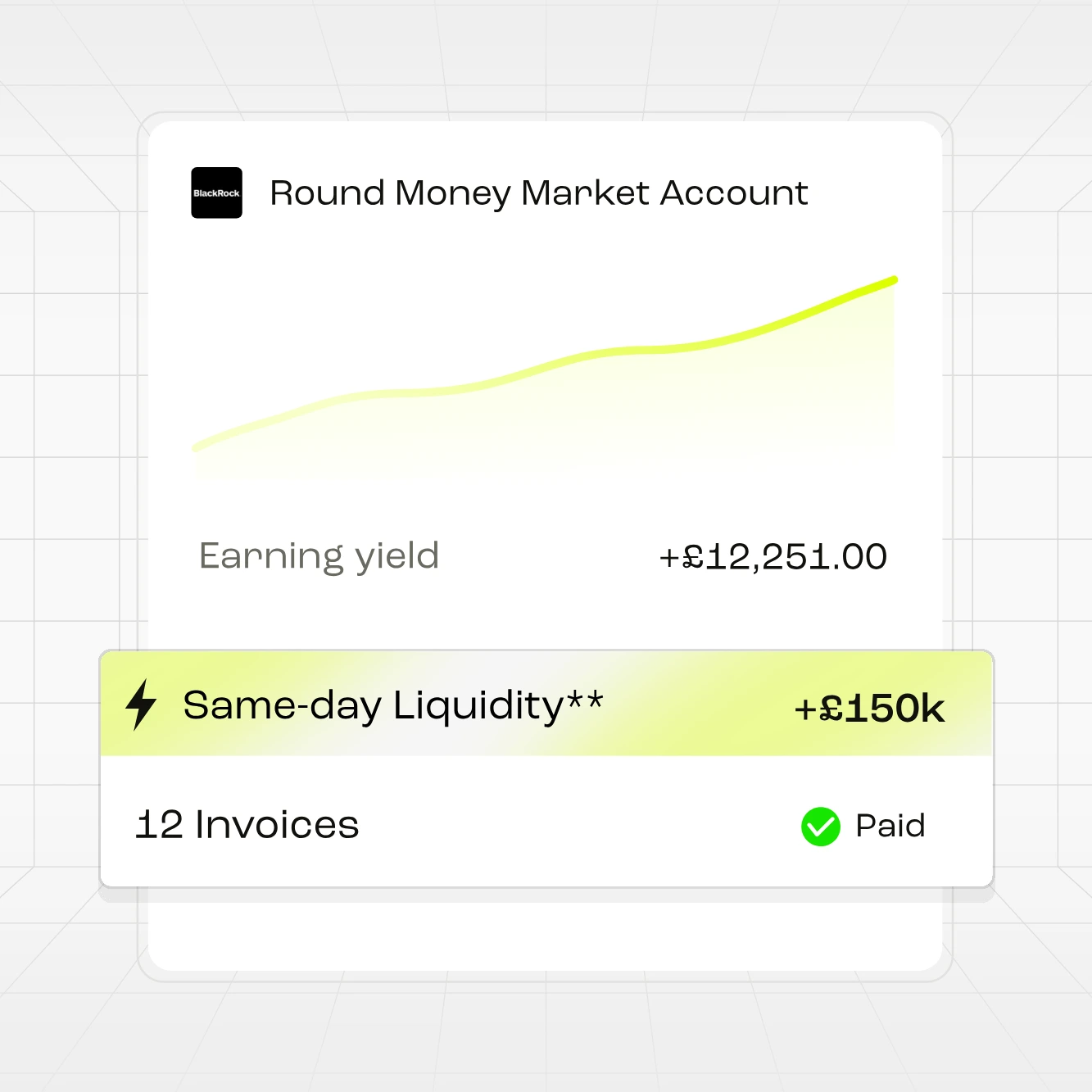
BlackRock's UK money market funds are one example of institutional-grade options now accessible to startups, offering same-class liquidity terms with the flexibility of short access windows. This is not investment advice; investors should conduct independent due diligence before making any financial decisions, and capital is at risk.
System connections
Integration is key to maximising the benefits of live monitoring and money management. Companies with well-connected systems report:
Standout integration features include:
- API-based connections with banks and ERPs
- Syncing with accounting software
- Real-time transaction updates
- Customisable reporting
"Automation in treasury management is not merely a trend but a strategic imperative, driven by the need for efficiency, accuracy, and real-time decision-making capabilities."
>
Source: The Global Treasurer
Setup steps for startups
Careful planning helps reduce disruptions during setup. Use the steps below to introduce treasury automation effectively.
Review your current process
To improve your treasury operations, first, take a hard look at your existing setup. Identify inefficiencies in areas like:
- Cash visibility across accounts
- Forecasting accuracy
- Bank account management
- Manual workloads
- Financial controls
This assessment will guide your next steps.
Select your software
Pick software that aligns with your current needs and can grow with your business. When evaluating options, think about:
- API connectivity
- Real-time data updates
- Compatibility with current systems
- Ease of use
- Room for growth
These features ensure smooth integration into your existing processes.
"You might have chosen the right system, but if it's mis-implemented, or ill-implemented, then your user won't be able to use it. They'll go back to the spreadsheet."
>
Source: Dimos Dimitriadis, founder of Treasury Technology Associates
Implementation tips
The implementation process can take a while, here's how to keep it on track:
- Assemble a team
- Assign a project lead
- Define roles for stakeholders
- Establish contact points with the vendor
- Develop a timeline
- Include phases like discovery, system setup, account configuration, testing, training, and go-live preparation
- Test everything
- Configure modules
- Test connections thoroughly
- Ensure the system works as expected
Comparing automation approaches for growing startups
Conclusion
Treasury automation is transforming financial operations for startups. Automating treasury tasks can lead to potential cost savings, cut payment errors and save time in cash management tasks.
Additionally, treasury tools enhance cash flow visibility while automated payment processes can meaningfully speed up transactions compared to manual methods. For startups aiming to scale, these advancements allow for smarter capital use and more informed financial decisions.
What's next in treasury tech
With these gains in efficiency, startups should gear up for the next phase of treasury technology. In 2022, global spending on treasury management systems hit $1.4 billion, yet only 15% of organisations currently leverage AI-driven forecasting tools. Startups that have already optimised operations now have the opportunity to embrace AI and cloud technologies to maintain momentum.
Emerging trends include the adoption of AI and machine learning, the growth of cloud-based treasury systems, and the integration of real-time payment solutions. These advancements promise better predictive insights, easier access to data, and faster transactions for seamless cash management.
Looking ahead, the future of treasury automation will focus on integrated AI tools and strengthened security protocols as finance leads focus on improving workflows and protecting payments data.
What changed in 2026
- AI moved from forecasting to execution. In 2025, "AI-driven treasury" mostly meant better predictions surfaced to a human for action. In 2026, the more capable platforms, including Round's AI Treasury Manager, can execute the recommended sweep, top-up or reallocation itself, inside rules and approval limits the finance team sets, closing the loop between insight and action.
- Accounts payable and payroll automation are converging with treasury automation. Startups running multi-entity operations increasingly want one system covering cash, bills and payroll rather than three disconnected tools. See Round's accounts payable solution and payroll solution.
- FSCS protection increased from £85,000 to £120,000 per eligible person, per UK bank, effective 1 December 2025, which changes the maths on how many banking relationships a multi-bank treasury automation strategy needs to fully protect a given reserve balance.
Related posts
Frequently Asked Questions
Start with the highest-volume, most repetitive tasks: bank reconciliation, balance monitoring and routine cash forecasting inputs. These have the clearest error rate under manual handling and the fastest payback once automated.
No. It removes the manual, repetitive workload so a smaller finance team can cover more ground. Decisions about risk tolerance, investment policy and unusual transactions still need a person accountable for them.
Implementation timelines vary with the number of bank accounts, entities and integrations involved, but most startups move through discovery, system setup, account configuration, testing and training in a matter of weeks rather than months, provided a project lead and clear stakeholder roles are in place from the start.
Increasingly, yes, within rules the finance team defines. Modern AI treasury agents can execute routine actions like sweeping idle cash into a savings account or topping up an operating account ahead of payroll, subject to approval thresholds you set. Larger or unusual transactions still route to a human for sign-off.
No. Entry-level automation, such as automated bank feeds and reconciliation, is accessible from very early stages and often pays for itself in hours saved alone. The more advanced capabilities, like multi-entity consolidation and AI-driven execution, tend to matter more as a startup adds accounts, currencies and entities.
The main risk is implementation, not the concept: rolling out a system your team doesn't fully understand or trust often ends with people reverting to spreadsheets. Careful setup, a clear project lead, and thorough testing of every connection before go-live matter more than how quickly you automate.