






























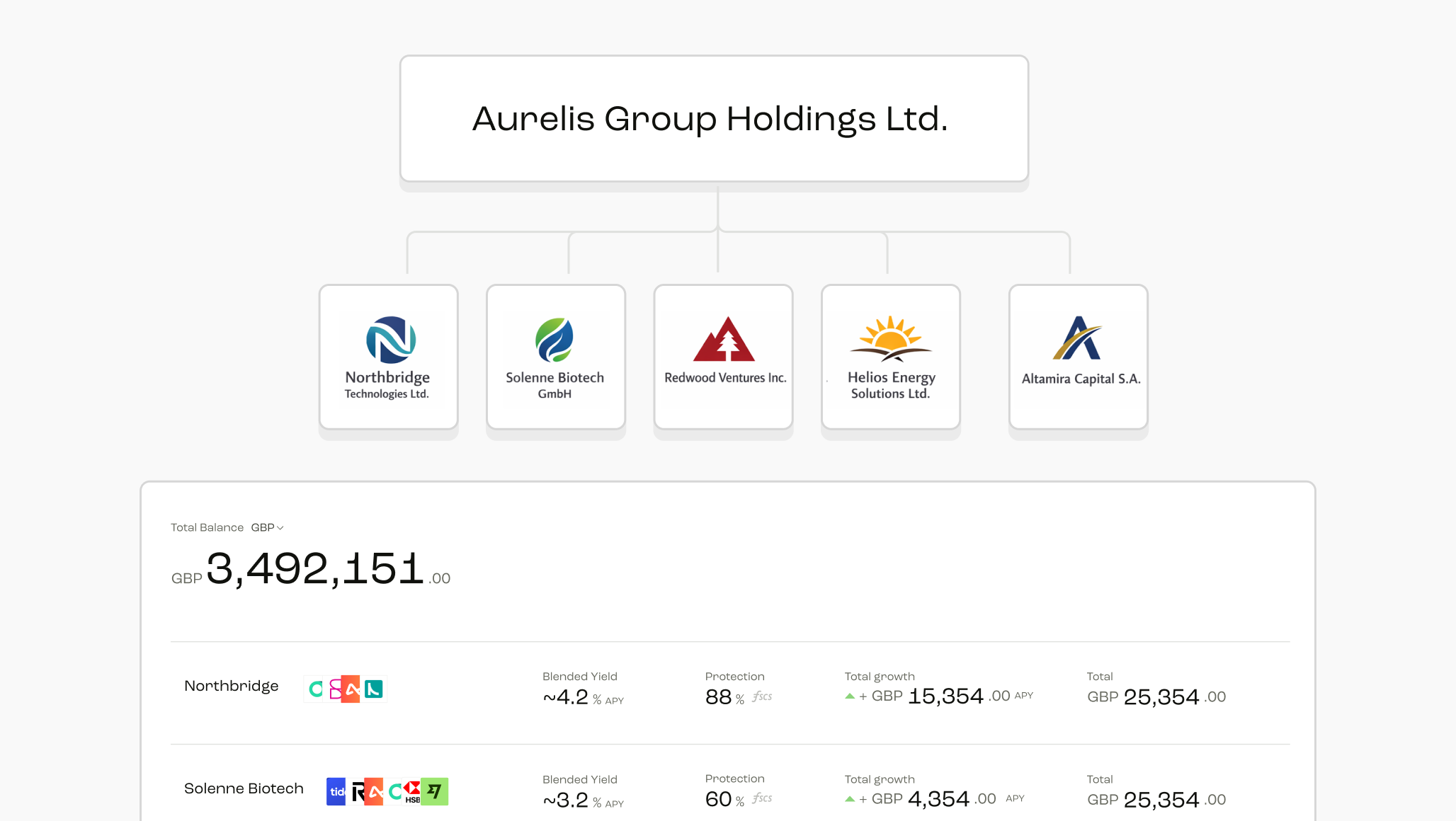
Multi Entity Cash Management: Running Group Treasury Across Subsidiaries
 Copied!
 How to build a trustworthy group cash position across subsidiaries while preserving legal ownership, local approval, intercompany evidence and currency context.
Multi entity cash management gives a group one reliable view of cash while preserving the legal ownership, permissions and obligations of each subsidiary. It is not simply a bigger bank dashboard. It requires entity aware data, intercompany rules, local authority and a group process for liquidity and currency decisions.
TL;DR
- It is not simply a bigger bank dashboard.
- It needs entity-aware data, intercompany rules, local authority, and a group process for liquidity and currency decisions.
- The guide covers when a company needs this rather than plain multi-bank visibility.
- It sets out how to handle intercompany transfers and who approves what when each entity has its own directors.
- It covers FX exposure across currencies, which tools genuinely support this, and a 30 day implementation sequence.
See Round's multi entity treasury view
This guide covers the operating design: group cash position, intercompany transfers, subsidiary approvals, currency exposure and technology selection. It is general information, not legal, tax or investment advice. Local specialists should review the structure and documents used by the group.
When does a company need multi entity treasury rather than multi bank visibility?
Multi bank visibility may be enough when one legal company uses several banks. The accounts share one legal owner, one core approval framework and one accounting context. Connections reduce portal hopping and make the cash position faster to assemble.
Multi entity treasury becomes necessary when the group position must preserve differences between legal owners. Common signals include:
- subsidiaries have separate directors, signatories or approval limits
- intercompany funding happens regularly
- the group operates in several currencies
- cash is concentrated in one entity while costs arise in another
- accounting systems or charts of accounts differ by subsidiary
- local restrictions or banking requirements affect movement
- the board asks for both consolidated and entity level liquidity
- acquisitions add accounts before systems are standardised
The practical test is simple: If finance cannot look at a group total and explain which part is accessible, restricted, committed or in transit, it needs more than account aggregation.
A useful operating model keeps two views together. The group view supports capital allocation and liquidity planning. The entity view protects local obligations and authority. Neither replaces the other.
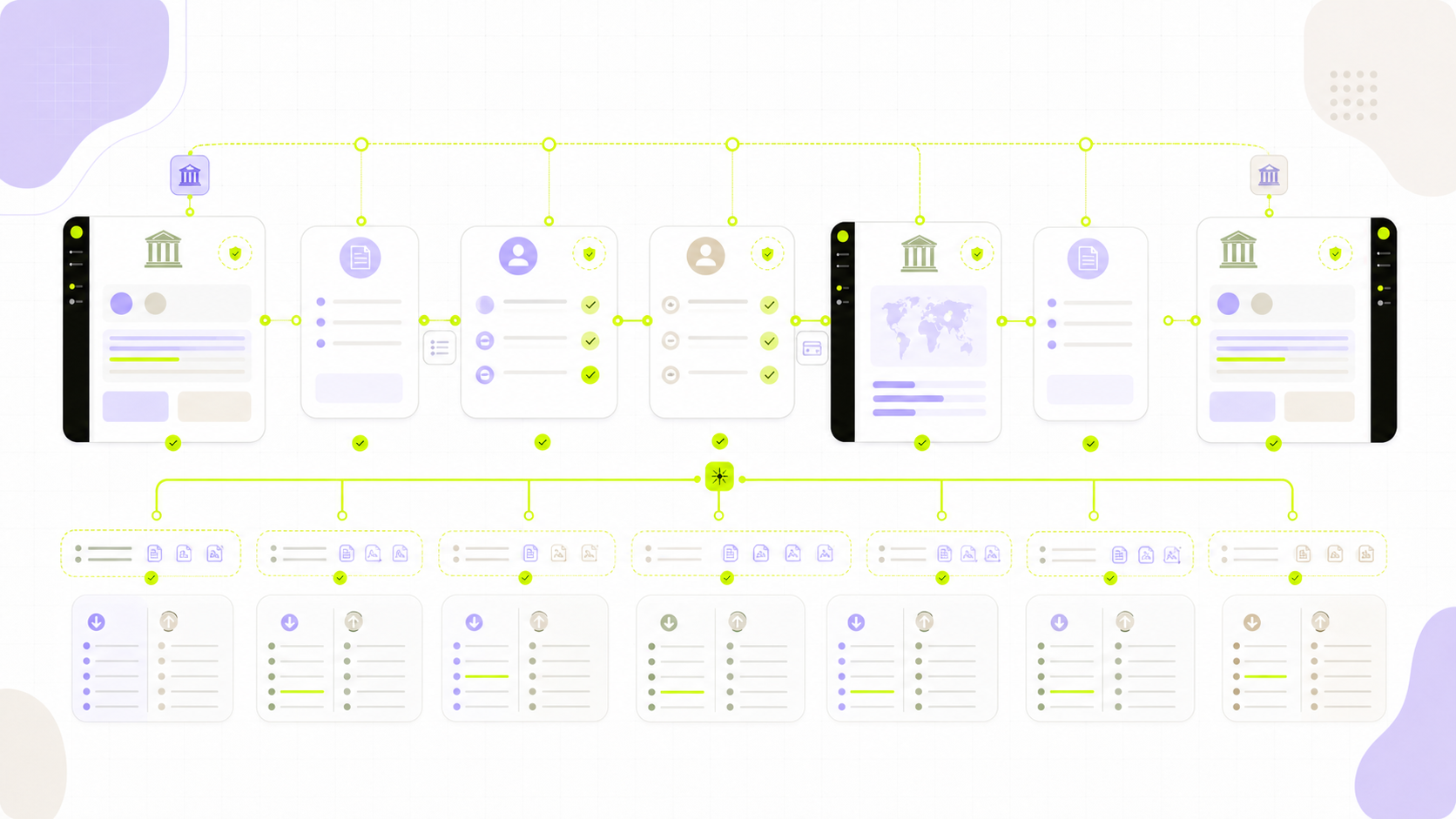
How do you get one group cash position across subsidiaries?
Start with a cash data model, not a dashboard. The group position is only as trustworthy as the ownership and classification behind each balance.
Build the account register
Create a controlled register containing every bank account, legal owner, currency, country, bank, purpose, status and authorised users. Add the source connection and expected refresh method. Include dormant and restricted accounts rather than leaving them out.
An account purpose field is especially useful. A balance in a collections account, payroll account, tax account or safeguarded structure does not have the same operational meaning as unrestricted operating cash. The group total should allow those categories to be separated.
Choose a reporting currency and time rule
Subsidiary balances need a common reporting currency for consolidation. Define the exchange rate source and time used. A group position compiled at 09:00 London time may include overnight data from one bank and near real time data from another. Label freshness by source rather than presenting every number as simultaneous.
Keep both the original currency and reporting currency values. Finance needs the original amount for local decisions and the translated amount for group planning.
Connect the sources
Bank application programming interfaces, open banking connections, host connections and files can all contribute. The right route depends on the bank, account type and country. Record connection status and last successful refresh with the balance.
A missing feed should create an exception, not a silent zero. The morning position needs to show which accounts are current, which are stale and which require manual confirmation.
Add known near term movements
Balance alone is not liquidity. Add payroll, tax, debt service, supplier runs, expected collections and approved intercompany movements for the relevant horizon. Keep forecast movements distinct from bank actuals.
Reconcile to entity records
The treasury view and the accounting records serve different timings, but they should meet regularly. Define how bank balances, ledger cash accounts and outstanding items are compared. Assign ownership for differences.
Round's multi entity view keeps the consolidated position connected to entity grouping, transaction drilldown, alerts and exports. Those capabilities only become trustworthy once the account register, legal ownership and freshness rules are explicit.
How should intercompany transfers between entities be handled?
An intercompany transfer is not merely a movement between two accounts. It changes the position of two legal companies and usually creates an accounting relationship between them.
The group should define permitted transfer types. Examples may include intercompany loans, capital contributions, service settlements, expense recharges or formal cash pool movements. Each type can have different documentation, tax and approval requirements.
For every proposed movement, capture:
- Sending and receiving legal entities.
- Business purpose.
- Currency and amount.
- Transfer type and relevant agreement.
- Approval authority in both entities where required.
- Expected accounting entries.
- Value date and bank route.
- Evidence retained after execution.
Avoid treating a central spreadsheet comment as the agreement. The system can link the request to the relevant document, approval and ledger treatment, but it cannot decide the legal character of the transfer.
Use an exception based funding routine
Many groups do not need constant manual sweeping. A threshold based routine can identify entities forecast to fall below a minimum operating buffer or hold cash above an agreed range. Treasury then reviews the exceptions and proposes documented movements.
This is better than moving everything to a central account by habit. It preserves visibility of why the movement is needed and lets the group consider transaction costs, currency, local restrictions and near term obligations.
Confirm both sides after execution
The sender's bank debit is only half the event. Confirm receipt, value date and the accounting entry in both entities. Unmatched intercompany balances become painful at month end and can obscure the actual group position.
Create an ageing view for intercompany items. Old differences should have an owner and a resolution date. The treasury workflow should make it easy to move from the group movement to both entity records.
Who approves what when each entity has its own directors?
Group policy does not erase local authority. Each company has its own bank mandate, directors and obligations. The approval design needs to respect those facts while giving the parent a consistent control standard.
Use an authority matrix with separate dimensions for:
- legal entity
- payment or transfer type
- amount band
- currency
- beneficiary status
- preparer and approver roles
- exceptional or urgent route
A single group limit applied everywhere is often too crude. A small subsidiary may have lower thresholds and different directors. A regulated or joint venture entity may require its own route. Newly acquired businesses may need temporary controls while mandates are changed.
Separate preparation, decision and release
One person may prepare a cash movement, but an authorised person should review the purpose, amount and supporting evidence. Bank release should follow the mandate and policy. The system can assemble context and route the request. It should not blur who made the decision.
Make substitution explicit
Absence creates pressure for informal workarounds. Define deputies and temporary authority before it is needed. Record start and end dates. Avoid shared credentials and ambiguous group chat approvals.
Preserve entity level evidence
The group should be able to answer who approved a movement for the sending entity and, where needed, who accepted the funding arrangement for the receiving entity. Store the approval, supporting document and execution evidence together.
Review access as the group changes
Leavers, acquisitions, director changes and bank mandate updates can leave stale access. Review platform users and bank permissions on a regular calendar and after material organisation changes. The central view should help surface access, but bank side permissions remain critical.
How do you manage FX exposure across entities in different currencies?
Multi entity groups often see currency exposure in fragments. One subsidiary expects euro receipts, another has dollar supplier commitments and the parent reports in sterling. Looking at each account separately can hide natural offsets or create unnecessary conversions.
Begin with an exposure register that combines:
- current cash by entity and currency
- committed receivables and payables
- payroll, tax and debt obligations
- approved intercompany movements
- forecast items with clear confidence labels
Keep transaction exposure separate from translation effects used for reporting. They have different decisions and owners.
Net information before netting money
The first improvement is a group view of exposures. That may reveal that one entity's expected receipt offsets another's payment need. Whether the group can settle internally depends on legal, tax, banking and documentation considerations. Do not assume an economic offset automatically permits a cash transfer.
Set policy thresholds
Define which exposures are monitored, when a decision is required and who can approve it. A policy may distinguish committed flows from uncertain forecasts and may set different horizons or materiality thresholds.
Record the decision trail
For each action or decision not to act, retain the exposure snapshot, policy basis, approver and instrument or transfer used. This helps the board understand outcomes without relying on hindsight.
Software can collect balances and scheduled flows, translate values and surface exceptions. An authorised person should still decide how to manage an exposure. Product terms, costs and risks require appropriate review.
Which tools support genuine multi entity treasury?
Look past the number of connected accounts. Genuine multi entity support should preserve legal ownership and controls throughout the workflow.
Use this test:
Products such as Nomentia, Trovata, Cobase, Embat and Round approach the problem from different starting points. Some offer broad treasury suites. Some concentrate on bank data. Some combine cash context with payment or payables workflow. A fair selection compares your actual structure, not generic claims.
Bring a small but difficult scenario to every demo: three entities, two currencies, different directors, one stale bank connection and one proposed intercompany transfer. Ask the vendor to show the group position, local permissions, exception and evidence trail. That scenario exposes whether “multi entity” is a filter on a dashboard or a real operating model.
A 30 day implementation sequence
In the first week, confirm entities, accounts, owners, currencies and connection routes. Resolve unknown and dormant accounts before connecting them.
In the second week, establish the group position with freshness labels and original currency values. Reconcile it to source accounts and document accepted timing differences.
In the third week, configure users, entity permissions, approval bands and an intercompany request template. Test ordinary and exceptional movements without sending money.
In the fourth week, run the morning position and weekly liquidity meeting from the new view. Record exceptions, refine the process and agree acceptance criteria for moving away from the old spreadsheet.
Do not make full automation the first milestone. Make a trusted group position the first milestone. Then add workflow where the team understands the authority and evidence required.
Sources
Frequently Asked Questions
Not automatically. The answer depends on ownership, agreements, local law, tax, banking terms and obligations. Use appropriate legal and tax advice before establishing a transfer or pooling arrangement.
No. Some cash may be restricted, committed, stale, held in another currency or unavailable to another entity without a documented movement.
Not necessarily. Common banking can simplify some operations, but local coverage, resilience, terms and entity needs differ. A central data and control model can support several banks.
Set the rule according to decision needs and source capability. Show the last successful refresh for each account so users can distinguish current data from stale data.
Data collection, classification and exception preparation can be automated. Legal authority, unusual transfers and payment release need explicit human ownership and appropriate controls.