






























Should a UK company use a money market fund sweep in 2026?
 Copied!
 A practical 2026 control framework for UK multi-entity treasury teams deciding whether, when and how much cash to sweep into a money market fund.
Use an MMF sweep only for cash that one legal entity can leave invested without putting its near-term obligations at risk. Calculate eligibility separately for every entity, preserve an operating buffer, honour the fund's dealing and settlement terms, and stop the rule when data or circumstances fall outside policy. When investing in money market funds, your capital is at risk.
TL;DR
- A sweep is a cash-control rule, not a judgement that every positive balance is surplus.
- Use one calculation method across the group, but approve inputs and limits by legal entity.
- Subtract committed outflows, operating buffers, restricted cash and pending movements before considering a sweep.
- Set hard stops for stale data, unusual outflows, missed dealing deadlines, limit breaches and unapproved rule changes.
- Review the rule against actual shortfalls, overrides and forecast error, not only the amount invested.
When is an MMF sweep appropriate?
An MMF sweep is appropriate when the company can distinguish operational cash from genuinely surplus cash using current, entity-level data. It is a poor fit when the forecast is unreliable, important outflows are missing, an entity depends on informal intercompany support or the team cannot explain how quickly a redemption becomes usable cash.
That distinction matters because a money market fund is an investment, not another current account. The FCA describes MMFs as pooled funds holding high-quality short-term assets and says investments are not guaranteed. Its work on MMF resilience also explains that stressed redemptions can create delays, losses or suspension risk. Access terms should therefore be treated as an operating constraint, not a promise.
The strongest go-or-no-go test is operational. Ask whether the company could meet its obligations if the sweep paused today and the invested cash did not return on the assumed timeline. If the answer depends on hope, a group-wide balance or an untested manual workaround, keep more cash outside the rule.
Build the rule separately for each legal entity
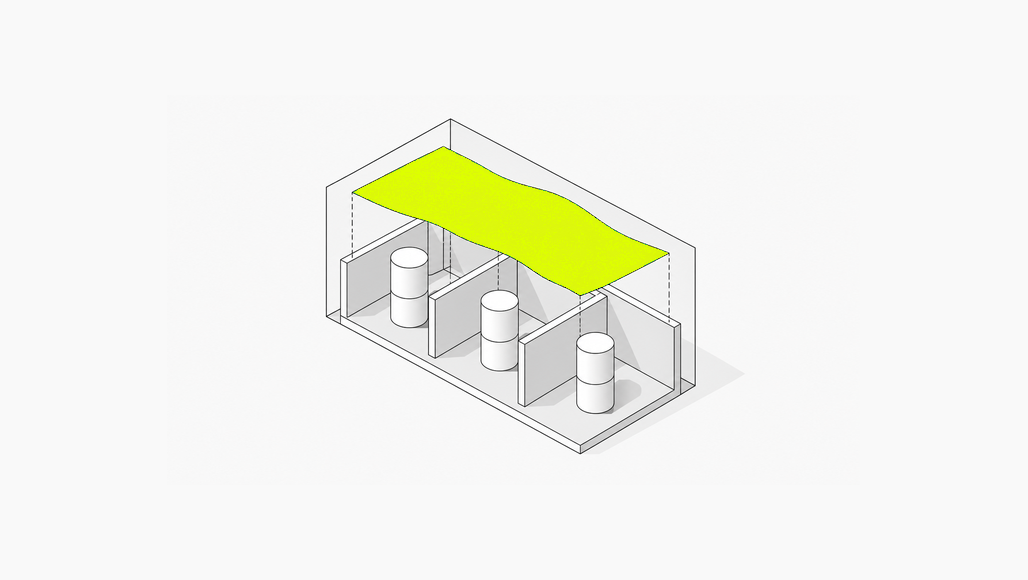
A multi-entity dashboard can give treasury one view, but it does not make cash interchangeable. The parent, trading company and overseas subsidiary may have different payroll dates, tax obligations, restricted balances, currencies and authority. The existing Round guide to multi-entity cash management explains that legal ownership and local authority must remain visible. The sweep rule should preserve the same boundary.
Standardise the method, not the number. A group can define one eligibility formula and review cadence, while each entity supplies its own inputs and receives its own threshold, minimum transfer and owner.
Inputs each entity needs
- Usable opening cash: cleared balances the entity may actually use.
- Committed outflows: payroll, tax, debt service, supplier runs and approved one-offs inside the horizon.
- Operating buffer: an approved cushion for forecast error and timing variance.
- Restricted balances: cash excluded by contract, policy or purpose.
- Pending movements: transfers, card settlements and receipts that could otherwise be counted twice.
- Access window: the actual time from a valid redemption instruction to usable cash.
The initial calculation is simple: usable cash minus committed outflows, operating buffer, restricted cash and pending outbound movements. A positive result is only potentially sweepable. The rule must then apply product limits, dealing timing, minimum transfer size, concentration constraints and any local approval requirement.
Use a control stack, not a single balance threshold
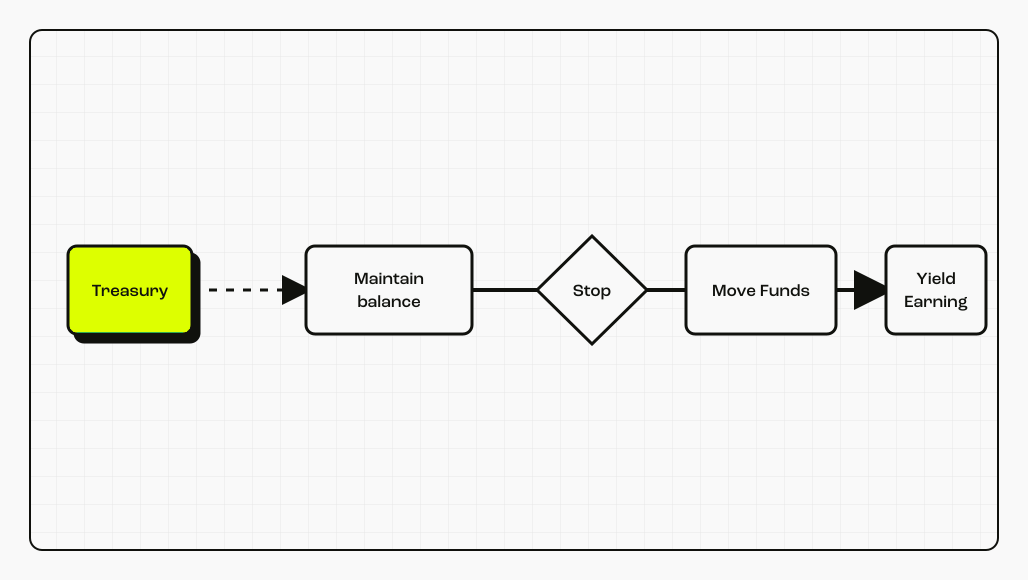
A threshold alone says “move cash above £X”. It cannot tell whether the balance data is fresh, a tax payment was added after the forecast, the dealing window has closed or the entity already has too much exposure to one fund. A reliable sweep needs several controls in sequence.
Our current money market fund page says finance teams can see invested cash alongside operating balances and combine eligible MMFs with automations. Our automated workflows page describes scheduled withdrawals and balance-maintenance rules. Those are useful product facts, but they do not replace the company's decision about what the threshold should be.
What does the calculation look like across three entities?
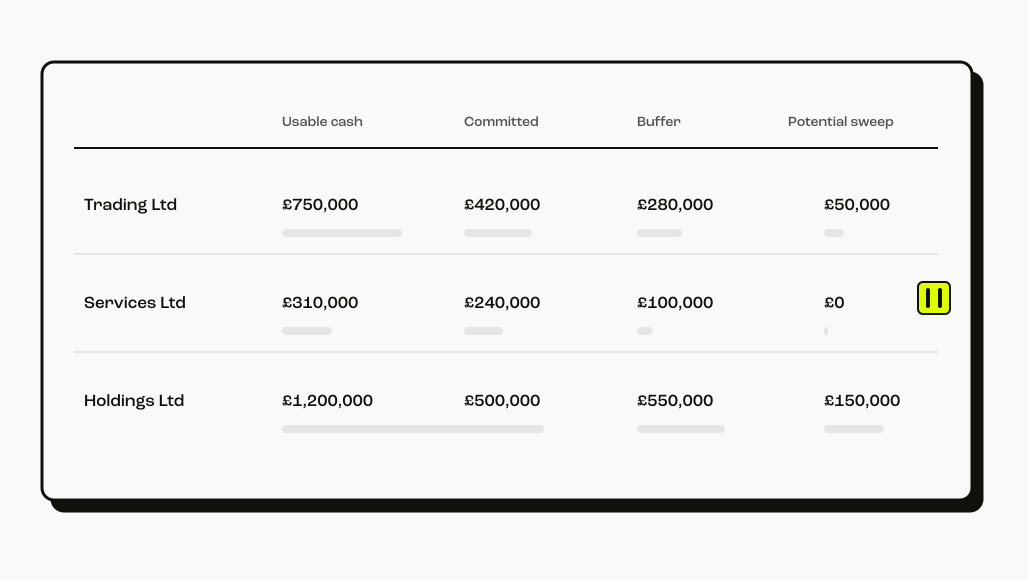
Consider an illustrative UK group with three companies. The numbers below demonstrate control logic only. They are not a recommendation, forecast or statement of product performance.
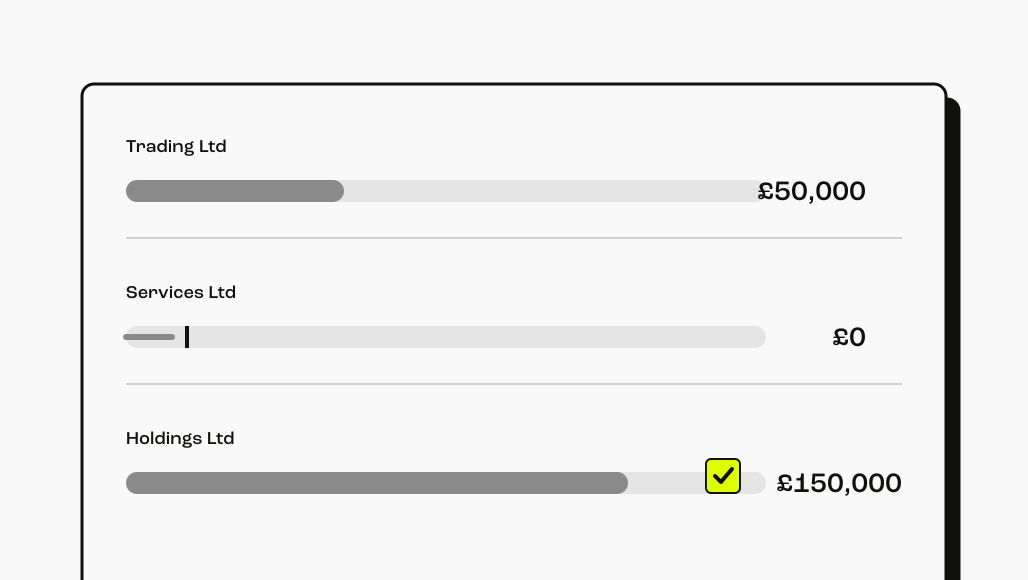
Trading Ltd has £50,000 left after its commitments and control deductions. Services Ltd is £30,000 below its required floor, so the rule produces no sweep and should flag the shortfall. Holdings Ltd has £150,000 potentially eligible. The group total is £200,000, but there should still be two entity-specific decisions, not one group transfer.
Before either amount moves, the system checks freshness, minimum transfer, concentration, timing and stop conditions. If Holdings Ltd adds a £120,000 approved acquisition payment after the calculation, its eligible amount becomes £30,000. If that falls below the minimum transfer, the correct action may be no movement at all.
Define stop conditions before enabling automation
A stop condition prevents an automated rule from acting on information or circumstances it was not designed to handle. It is not an error message after the money has moved. It is part of the rule itself.
Stop the sweep when any of these is true
- A bank balance, forecast or committed-outflow feed is stale or unavailable.
- A material one-off payment is proposed but not yet represented in the forecast.
- The calculation mixes balances or obligations from different legal entities.
- The proposed move would cross a product, entity or concentration limit.
- The dealing deadline or required settlement window cannot be met.
- A fund, platform or bank reports an operational restriction.
- The rule, threshold, owner or destination changed without the required approval.
- A prior sweep or redemption remains unmatched or unresolved.
The BlackRock Institutional Cash Series prospectus defines dealing cycles and explains that instructions received after a final cut-off are handled in the next business-day cycle. It also notes that intermediaries may impose their own deadlines. Treasury should store and test the route it actually uses, not copy a time from a product summary and assume every instruction follows it.
Regulatory conditions are also evolving. In June 2026, the FCA set out its intended direction for revised MMF resilience rules, following the Government's May 2026 reform announcement. That is a reason to retain a named owner for product terms and policy, not a reason to predict the final rules.
Give every exception an owner and a closure test
Automation reduces repetitive movement, but it increases the importance of clear exception handling. An alert saying “sweep failed” is not enough. It should state the entity, amount, rule, breached condition, latest usable data, deadline and named owner. The owner then needs a small set of permitted actions.
- Hold: leave cash where it is and set the next review time.
- Correct: repair a source or update a confirmed outflow, then rerun the calculation.
- Override: use a time-limited, approved exception with a recorded reason.
- Escalate: send a material policy, access or concentration issue to the named approver.
- Close: record the outcome, supporting evidence and whether the rule needs changing.
Closure means the operating state is understood. A resolved exception should identify what happened, whether cash moved, who decided, what evidence was used and whether any follow-up remains. Counting dismissed alerts as “resolved” hides the very weaknesses the control is meant to surface.
Run the policy on two cadences
The sweep may evaluate several times a day, but the policy needs a slower management review. Separate the operating cadence from the governance cadence so daily automation does not quietly change the company's risk position.
Do not judge the design only by how much cash it sweeps. Better measures include the number of operating shortfalls, stale-data stops, unplanned redemptions, overrides, late instructions and unresolved exceptions. A cautious rule that stops correctly can be better than an aggressive rule that maximises invested cash.
How does this fit our current product?
Our public pages currently list money market funds, treasury automations covering sweeps, top-ups and alerts, connected banking and multi-entity support. Our treasury solution page says teams can view invested cash beside operating balances and plan withdrawals around upcoming needs. That supports the mechanics described here, subject to the customer's actual configuration and eligibility.
Availability still needs to be confirmed. Our pricing page varies features by plan and labels some custom workflow capabilities as “soon”. A buyer should not treat a “soon”, beta or early-access item as generally available. Confirm the exact entities, currencies, rule types, roles, evidence and exception behaviour before relying on an automated process.
For the broader choice between bank deposits, deposit platforms and MMFs, read where UK businesses can hold idle cash. For cash-horizon design, see how to separate operating cash from longer-horizon surplus. For a wider implementation context, use the startup treasury automation playbook. This article starts after those choices: its job is to turn one approved option into a controlled operating rule.
Test the rule before you automate it
Bring your entity map, cash horizon and stop conditions to a Round walkthrough. Confirm which controls are available for your plan and where your team still needs a manual decision.
Sources and further reading
- Round: Money Market Funds, accessed 20 September 2026.
- Round: Automated Workflows, accessed 20 September 2026.
- Round: Treasury solution, accessed 20 September 2026.
- Round: Pricing and feature matrix, accessed 20 September 2026.
- Round: Connected Banking, accessed 20 September 2026.
- Round: Best place for idle business cash in the UK, accessed 20 September 2026.
- Round: Earn interest on business cash without losing access, accessed 20 September 2026.
- Round: Multi-entity cash management, accessed 20 September 2026.
- FCA: Update on reforms to the UK Money Market Fund Regulation, 8 June 2026.
- FCA: Updating the regime for Money Market Funds, accessed 20 September 2026.
- HM Treasury: Reforms to Money Market Fund Regulations, 14 May 2026.
- BlackRock: Institutional Cash Series plc prospectus, accessed 20 September 2026.
Nothing within this blog is intended to be a recommendation. Round does not offer financial advice.
Frequently Asked Questions
A money market fund sweep is a rule that moves cash judged to be surplus from an operating balance into a money market fund, or returns cash when the operating balance needs support. The rule should define eligible cash, an entity-specific floor, timing, ownership and stop conditions. When investing in money market funds, your capital is at risk.
No. Each legal entity has its own obligations, restrictions, currencies and forecast confidence. A group can use one calculation method, but the inputs, threshold and owner should be approved for each entity.
Start with usable cash for one entity, then subtract committed outflows, the operating buffer, restricted cash and pending movements. The remaining positive amount is a starting point, not an instruction. Apply the minimum transfer, concentration limit, cut-off and stop conditions before moving anything.
A group view helps treasury see concentration and upcoming needs, but it should not erase legal ownership. A positive group total does not make one entity's cash available to another. Intercompany movements need their own authority, documentation and accounting treatment.
Stop when balance or forecast data is stale, a material outflow is unconfirmed, a rule changed without the required approval, a dealing deadline cannot be met, an entity boundary is unclear, a limit would be breached or the fund or platform reports an operational restriction.
No. Dealing frequency is not the same as guaranteed access. Instructions are subject to deadlines, settlement mechanics and fund terms, and stressed conditions can affect redemptions. Keep operating cash outside the sweep according to the company's policy.
Confirm the exact plan, entity and currency coverage, the available sweep and withdrawal rules, data refresh timing, cut-offs, roles, change controls, exception handling and evidence retained. Our public pricing page labels some custom workflow capabilities as soon, so they should not be treated as generally available until confirmed.